
Discover Africa's leading eco-lodges that combine luxury with environmental responsibility. Solar-powered, community-owned, and conservation-focused — safari that gives back.
Luxury Safari That Heals the Planet
The safari industry is undergoing a green revolution. Africa's leading lodge operators are proving that luxury and sustainability aren't just compatible — they're inseparable. The most prestigious safari brands are now the most environmentally responsible, investing millions in solar power, water conservation, community development, and conservation initiatives that go far beyond marketing buzzwords.
Choosing an eco-lodge doesn't mean compromising on comfort. It means choosing a lodge where your accommodation fee actively funds the protection of the wilderness around you, supports the communities who share the land with wildlife, and minimises the environmental footprint of your visit. It's luxury with purpose — and it makes the safari experience even more meaningful.
What to Look for in an Eco-Lodge
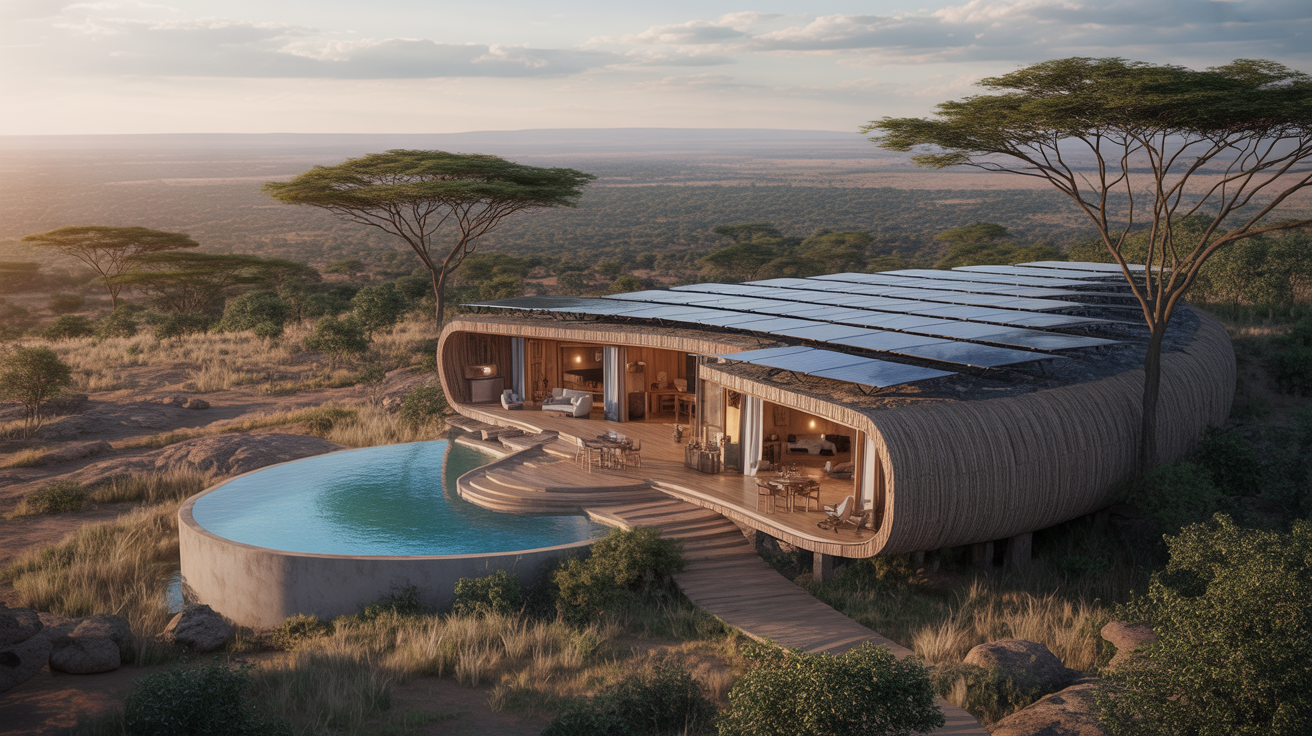
Energy: Leading eco-lodges run entirely on solar power with battery storage. Singita's lodges across Africa are powered by micro-grid solar installations. Wilderness Safaris has invested over $10 million in solar across their properties. Look for lodges that have eliminated or drastically reduced generator use.
Water: In arid safari environments, water conservation is critical. Eco-lodges use water recycling systems, rainwater harvesting, low-flow fixtures, and greywater treatment for irrigation. Some Okavango Delta camps use the Delta's own water, filtered through sophisticated purification systems.
Community: The best eco-lodges are either community-owned or share significant revenue with local communities. Kenya's conservancy model leads the way — lodges pay communities a per-acre lease fee that incentivises wildlife conservation over farming or poaching. Namibia's community conservancies follow a similar model.
Construction: Sustainable lodges use local, natural materials (stone, thatch, reclaimed wood) and design buildings that can be removed without permanent scarring of the landscape. Many luxury camps are built on raised platforms with minimal ground impact, and some are designed to be completely disassembled.
Africa's Leading Eco-Lodges
Singita (Multiple Locations): Arguably the world's most luxurious safari brand, Singita is also a conservation leader. Their 100-year vision includes habitat restoration, community development, and species protection. Every Singita property is powered by solar, uses water responsibly, and contributes to landscape-scale conservation.
Wilderness Safaris (Multiple Locations): Operating in 7 African countries, Wilderness Safaris is one of the continent's largest conservation and safari operators. Their Children in the Wilderness programme has educated thousands of African children, and their environmental management systems are industry-leading.
&Beyond (Multiple Locations): &Beyond's "Care of the Land, Care of the Wildlife, Care of the People" ethos drives everything they do. Their Phinda lodge in South Africa pioneered community ownership of safari lodge land, and their sustainability practices include zero single-use plastics, solar power, and extensive community programmes.
Odzala Discovery Camps (Congo): These camps in the Republic of Congo's Odzala-Kokoua National Park combine luxury with gorilla and forest elephant conservation in one of Africa's last pristine rainforests. The operation funds anti-poaching, research, and community development in a critical conservation area.
Basecamp Explorer (Masai Mara, Kenya): A certified carbon-neutral operation, Basecamp Explorer employs 96% local Maasai staff and runs entirely on renewable energy. Their community tourism model has become a case study in sustainable safari development.
How to Choose a Responsible Safari
Ask your operator directly: What percentage of revenue goes to conservation and communities? What are the lodge's energy sources? How are waste and water managed? What community programmes exist? Reputable operators are proud of their sustainability credentials and will answer transparently.
At Simba Beyond Africa Safaris, we prioritise eco-conscious operators in all our itineraries. We believe the best safari is one that leaves the wilderness better than you found it. Contact us to plan your sustainable safari adventure.