

About the African Lion
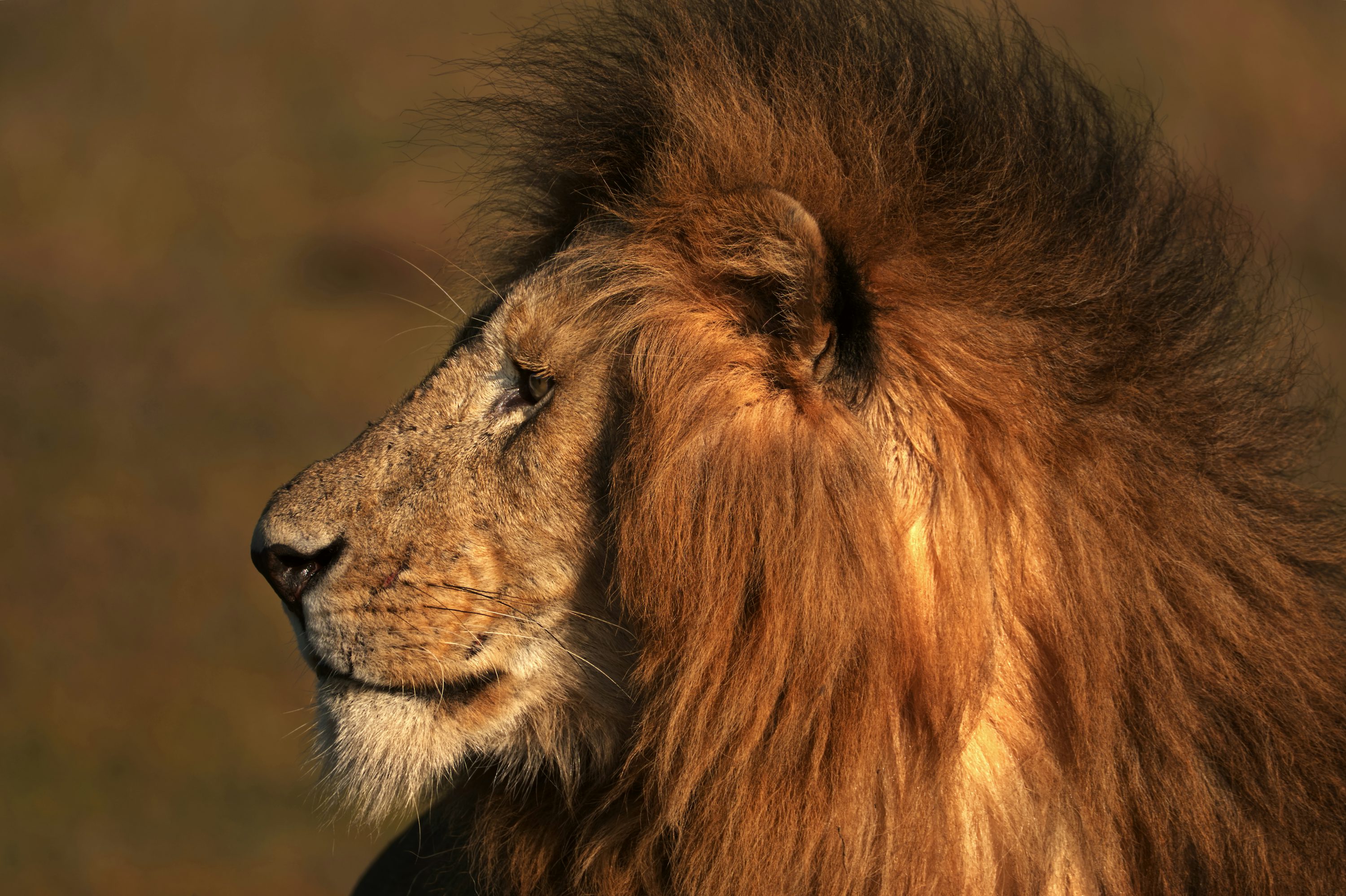
The African lion is the second-largest living cat after the tiger. Known as the "King of the Jungle," lions are the only truly social cats, living in family groups called prides. Male lions are instantly recognizable by their magnificent manes, which darken with age and signal health and dominance.
African lions once roamed across Africa, southern Europe, and western Asia. Today, they are found primarily in sub-Saharan Africa, with a critically endangered population in India's Gir Forest. Lions are apex predators and keystone species — their presence directly shapes the ecosystem. A pride typically consists of related females, their cubs, and a small number of adult males. Female lions do most of the hunting, working together in coordinated groups to take down prey much larger than themselves. Male lions defend the pride's territory, which can span up to 260 square kilometers. The roar of a male lion can be heard from 8 kilometers away and serves as both a territorial warning and a rallying call to pride members. Lions spend approximately 20 hours per day resting, making early morning and late afternoon the best times for active viewing on safari.
Height
1.0–1.2 m (3.3–3.9 ft) at the shoulder
Weight
Males: 150–250 kg (330–550 lbs) | Females: 120–182 kg (265–400 lbs)
Top Speed
Up to 80 km/h (50 mph) in short bursts
Diet
Wildebeest, zebra, buffalo, antelope, warthog, and occasionally giraffe
Habitat
Grasslands, savannas, open woodlands, scrublands
Social
Prides of 10–40 individuals led by dominant males; the only social cat species
Gestation
110 days (approximately 3.5 months)
Offspring
1–6 cubs per litter, typically 2–4
Predators
No natural predators as adults; cubs vulnerable to hyenas, leopards, and rival male lions
Did You Know?
Mind-blowing facts about african lions that will make you an instant expert.
A lion's roar can be heard from 8 km (5 miles) away — the loudest of any big cat
Lions sleep up to 20 hours a day, earning them the title of Africa's laziest predator
Female lions do 85–90% of the hunting for the pride
A male lion's mane grows darker with age — darker manes indicate higher testosterone and better health
Lion cubs have rosette spots that fade as they mature
Lions are the only cats that live in social groups called prides
A lion can eat up to 40 kg (88 lbs) of meat in a single feeding session
White lions are not albinos — they carry a rare recessive gene called leucism
Behavior & Social Life
Lions greet each other by rubbing heads — a behavior called "head bunting" that reinforces social bonds
Male lions taking over a pride will often kill existing cubs to bring females into estrus
Lions can see 6 times better than humans in low light, making them exceptional night hunters
Pride females synchronize births so they can communally nurse and protect cubs
Lions mark territory with urine, scratch marks on trees, and vocalizations
Where to See African Lions
The top countries and national parks for unforgettable african lion encounters.
Best National Parks
Serengeti National Park
Tanzania
Highest lion density in Africa — over 3,000 lions across 14,750 km²
Masai Mara National Reserve
Kenya
Famous Marsh Pride lions; superb year-round sightings
Kruger National Park
South Africa
~1,600 lions; excellent infrastructure for self-drive and guided safaris
Okavango Delta
Botswana
Unique "swimming lions" that hunt buffalo in floodwaters
South Luangwa National Park
Zambia
Legendary walking safaris with close lion encounters
Hwange National Park
Zimbabwe
Home of the famous Cecil the Lion; large resident prides
Loading map...
Viewing Tips
Go on early morning game drives (5:30–7:30 AM) when lions are most active after nighttime hunts
Late afternoon drives (4:00–6:30 PM) often catch lions waking and preparing to hunt
Listen for alarm calls from other animals — impala, baboons, and zebra often alert to lion presence
Scan tree lines and rocky outcrops where lions rest during the heat of the day
Night drives in private reserves offer incredible opportunities to witness hunting behavior
Stay patient at waterholes — lions often ambush prey at drinking spots
Photography Tips
Use a 200–400mm telephoto lens for portrait shots
Early morning golden hour produces the most dramatic lion portraits
Shoot from a low angle for more powerful, intimate compositions
Focus on the eyes — sharp eye contact creates the most compelling wildlife images
Capture behavioral moments: yawning, grooming, and cub play for storytelling
Best Time to See African Lions
The dry season (June–October) is the best time to see lions across most of Africa. Vegetation thins out, animals concentrate around water sources, and predator-prey interactions increase dramatically. The Great Migration in the Serengeti and Masai Mara (July–October) offers the most spectacular lion hunting action anywhere on Earth.
Jan
Green season; cubs often born; harder to spot in thick vegetation
Feb
Calving season attracts predators; good cub sightings
Mar
Late rains; lush landscape; lions active but spread out
Apr
Rains ending; prey concentrating; hunting activity increases
May
Early dry season; vegetation thinning; improving visibility
Jun
Excellent — dry season begins; lions active at waterholes
Jul
Peak season — Great Migration attracts predators; spectacular hunts
Aug
Best month — river crossings bring dramatic lion hunting scenes
Sep
Outstanding — dry conditions concentrate all wildlife
Oct
Excellent — heat drives animals to water; thrilling encounters
Nov
Short rains begin; animals disperse; still good sightings
Dec
Green season; newborn prey; lions well-fed and visible
African Lion Safari Packages
Handpicked safari experiences designed for the ultimate african lion encounter.
Top African Lion Lodges
The world's best safari lodges for african lion viewing — luxury meets wilderness.
Singita Grumeti
Serengeti, Tanzania
Ultra-luxury lodge overlooking lion territory; frequent pride sightings from your room
Sabi Sabi Earth Lodge
Sabi Sand, South Africa
Underground luxury in leopard and lion country; exceptional Big 5 density
African Lion Conservation
Understanding the threats facing african lions and how your safari helps protect them.
IUCN Status: Vulnerable
Population trend: decreasing
African lion populations have declined by approximately 43% over the past 21 years (three lion generations). The IUCN classifies them as Vulnerable, with West African populations critically endangered. Conservation efforts focus on reducing human-wildlife conflict, protecting habitat corridors, and anti-poaching initiatives. Key organizations include Panthera, the Lion Recovery Fund, and the African Wildlife Foundation. Responsible safari tourism directly funds conservation — every visitor contributes to protecting these magnificent animals.
Key Threats
Habitat loss and fragmentation
Human-wildlife conflict (livestock predation)
Poaching and illegal wildlife trade
Prey depletion due to overhunting by humans
Climate change affecting prey migration patterns
Retaliatory killings by pastoralist communities
How Your Safari Helps
Every responsible safari directly funds conservation through park fees, community levies, and lodge conservation contributions. Your visit employs anti-poaching rangers, funds habitat restoration, and provides economic incentives for local communities to protect wildlife.
African Lion FAQ
Common questions about african lion safaris — answered by our Africa wildlife experts.
The Serengeti (Tanzania) has the highest lion density in Africa with over 3,000 lions. The Masai Mara (Kenya), Kruger National Park (South Africa), and the Okavango Delta (Botswana) are also world-class lion destinations. For guaranteed sightings, private game reserves like Sabi Sand in South Africa offer the best odds.
Other Big Five Animals
Ready for Your African Lion Safari?
Our Africa wildlife experts will craft a bespoke safari focused on the most incredible african lion encounters. No obligation — just exceptional service.