
The Mara River crossings are the Great Migration's most dramatic moments. Discover exactly when and where to position yourself for this life-changing wildlife experience.
The Greatest Show on Earth
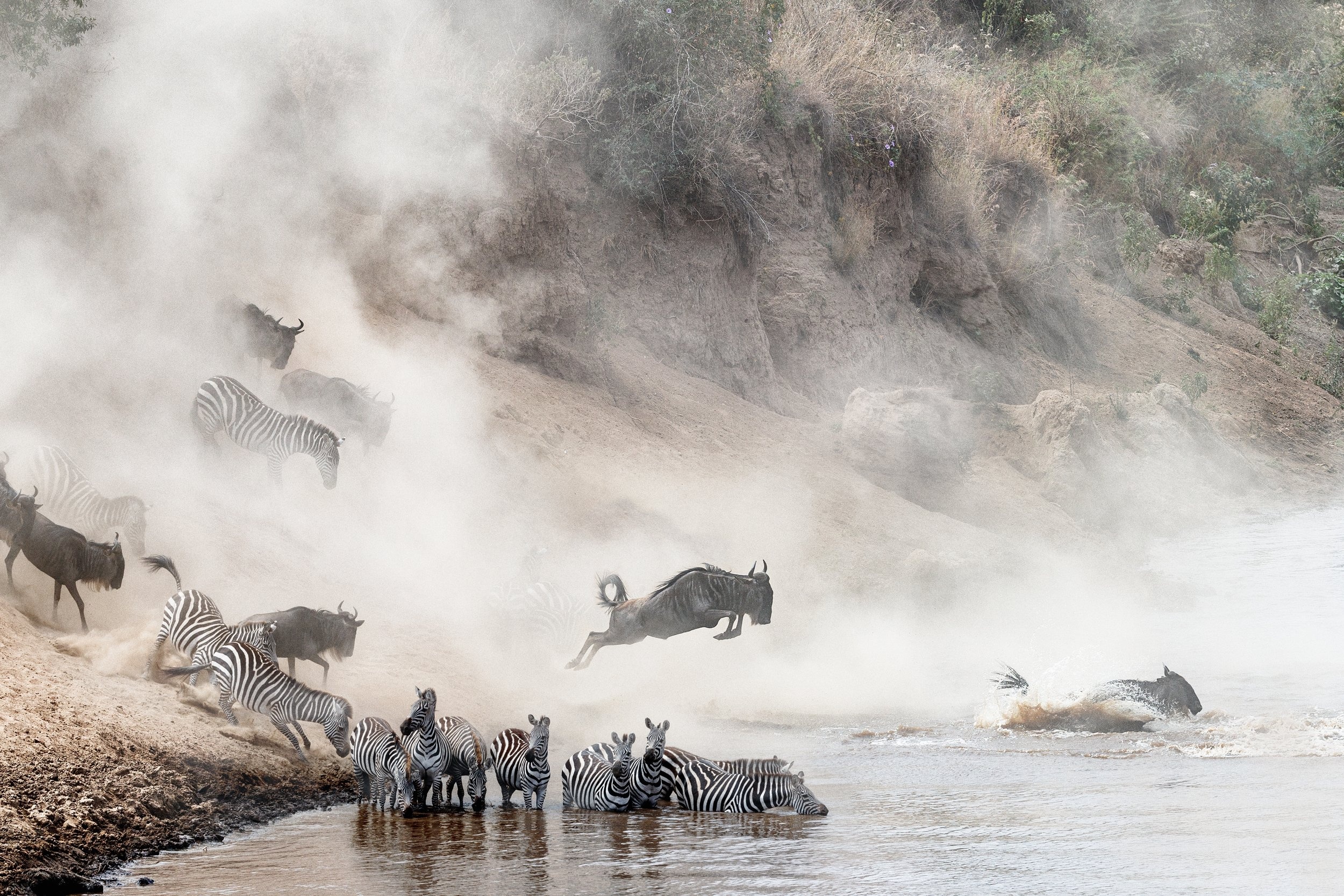
Of all the spectacles in the natural world, the Mara River crossing may be the most dramatic. Hundreds of thousands of wildebeest gather on the riverbanks, building courage for the deadly crossing. The water hides 5-metre Nile crocodiles. The current is treacherous. The far bank is steep and slippery. And yet, driven by an ancient instinct to follow the rains and fresh grass, the herds plunge in — and the chaos begins.
The sound alone is overwhelming: the thundering of hooves, the panicked bellowing of wildebeest, the splash of bodies hitting water, and the roar of crocodiles striking. The visual drama is equally intense — a mass of bodies churning through muddy water, some making it across, others swept downstream or dragged under. It's raw, visceral, and utterly unforgettable.
Understanding the Crossing Dynamics
Crossings are unpredictable. Herds may gather at the riverbank for hours — even days — without crossing. A single brave individual (or a particularly stressed one) usually triggers the stampede. Once the first animals enter the water, the rest follow in a frenzied rush that can last anywhere from 10 minutes to several hours.
Multiple crossings can happen in a single day, and herds sometimes cross in both directions — sometimes even crossing back to the side they started from. The chaos is part of the appeal: this isn't a choreographed event but a primal display of instinct, fear, and determination.
Where to Position Yourself
The best crossing points change from year to year depending on water levels and herd movements. Classic crossing sites include the main crossing near Serena Lodge (easily accessible from the Mara Triangle), Purungat Bridge area, and several locations along the northern Mara River.
Arrive early at a crossing point and wait patiently. The buildup — watching hundreds of thousands of animals nervously approaching the river's edge — is part of the experience. Your guide will read the herd's behaviour to predict when a crossing is likely. Some guides have an almost supernatural ability to identify 'crossing days'.
Photography Tips for River Crossings
Use a 200-400mm lens for individual action shots and a wide zoom (24-70mm) for the sweeping scale. Shoot at high shutter speeds (1/2000s+) to freeze the action. Continuous autofocus tracking is essential. Position for backlighting in the afternoon for dramatic splash shots. And shoot far more than you think — in the chaos of a crossing, you'll find the perfect moment only when reviewing later.
A river crossing is a once-in-a-lifetime experience for most visitors. Spend at least 4-5 nights in the Mara during peak season (August-September) for the best chance of witnessing this extraordinary event. Plan your migration river crossing safari.