
The leopard is the most elusive of the Big Five. Discover the best destinations, tracking techniques, and expert tips for unforgettable leopard sightings on your African safari.
The Leopard: Africa's Most Coveted Sighting
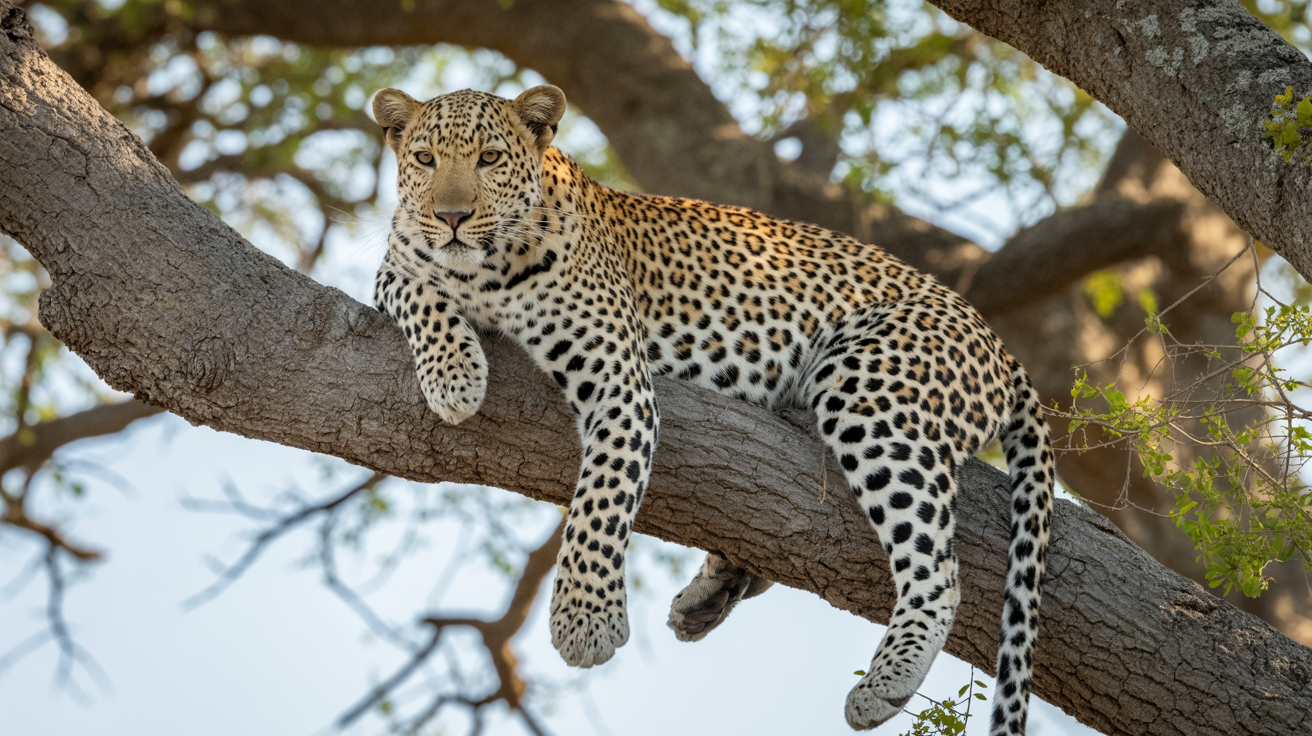
Of all the Big Five, the leopard is the one that safari veterans obsess over. While elephants and buffalo are virtually guaranteed, and lions are reliably found in most parks, the leopard remains genuinely elusive — a ghost that materialises from the dappled shadows of a tree, holds your gaze with those extraordinary amber eyes, and disappears as silently as it arrived.
A good leopard sighting is the measure of a great safari. When you find one — perhaps draped over a branch with a kill cached in the fork of the tree, or stalking through long grass with that impossibly fluid movement — it stops your heart. Leopards are the most beautiful of the big cats, and their power-to-weight ratio makes them perhaps the most impressive predators in Africa.
Best Destinations for Leopard Sightings
Sabi Sands Private Reserve, South Africa: The world's best destination for leopard viewing, full stop. The Sabi Sands leopards have been habituated to vehicles over decades, allowing incredibly close encounters. Lodges like Londolozi, Leopard Hills, and Kirkman's Kamp report leopard sightings on virtually every game drive. Off-road driving in the reserve means trackers can follow leopards through the bush, creating sightings that national parks simply can't match.
South Luangwa, Zambia: South Luangwa has one of the highest leopard densities in Africa, and the park's night drives provide exceptional viewing opportunities. Leopards here are remarkably habituated, often hunting within spotlight range. Walking safaris occasionally encounter leopards on foot — a genuinely heart-stopping experience.
Serengeti, Tanzania: The Seronera area of the central Serengeti is renowned for leopards. The riverine forest along the Seronera River provides perfect leopard habitat, and patient searching of fig and sausage trees often reveals a resting cat. The Serengeti's open plains make it one of the few places where leopards are sometimes seen hunting in daylight.
Masai Mara, Kenya: The Mara's private conservancies (Mara North, Olare Motorogi, Naboisho) offer excellent leopard viewing with fewer vehicles than the national reserve. The conservancies' riverine areas along the Mara and Talek rivers are prime leopard habitat.
Moremi & Khwai, Botswana: The Okavango Delta's varied terrain provides excellent leopard habitat. The Khwai River area is particularly known for habituated leopards, and the combination of water and woodland creates a unique setting for leopard encounters.
Understanding Leopard Behaviour
Leopards are solitary except when mating or when females have cubs. Males hold territories of 30-80 square kilometres, marked with scent and claw marks on trees. Females hold smaller, overlapping territories. Understanding territory patterns helps expert guides predict where leopards are likely to be.
Their hunting technique is a masterclass in stealth: they stalk to within 5-10 metres of their prey before launching an explosive ambush. The kill is typically by suffocation, and the leopard's remarkable strength allows it to haul prey weighing more than itself up into a tree — safe from lions and hyenas. Finding a hoisted kill is one of the surest signs that a leopard is nearby.
Leopards are incredibly adaptable, living in habitats ranging from rainforest to semi-desert, sea level to mountain tops. They're the most widespread of Africa's big cats, but their secretive nature means even healthy populations can go largely unseen without expert tracking.
Photography Tips
Leopards often rest in trees, so look up constantly. The dappled light of tree canopy creates beautiful but challenging photography conditions — use exposure compensation and spot metering on the cat's face. Early morning and late afternoon provide the warmest light for leopard portraits. A 200-400mm lens is ideal for most leopard encounters in vehicles.
At Simba Beyond Africa Safaris, we design leopard-focused itineraries for clients who want the best possible chances of this coveted sighting. Contact us for your leopard safari.